

Are Silver Statues Safe Around Kids?
Yes — on a shelf, not in small hands. Silver statues are solid display pieces, not toys. The plain safety rules for homes with kids, from the workshop.
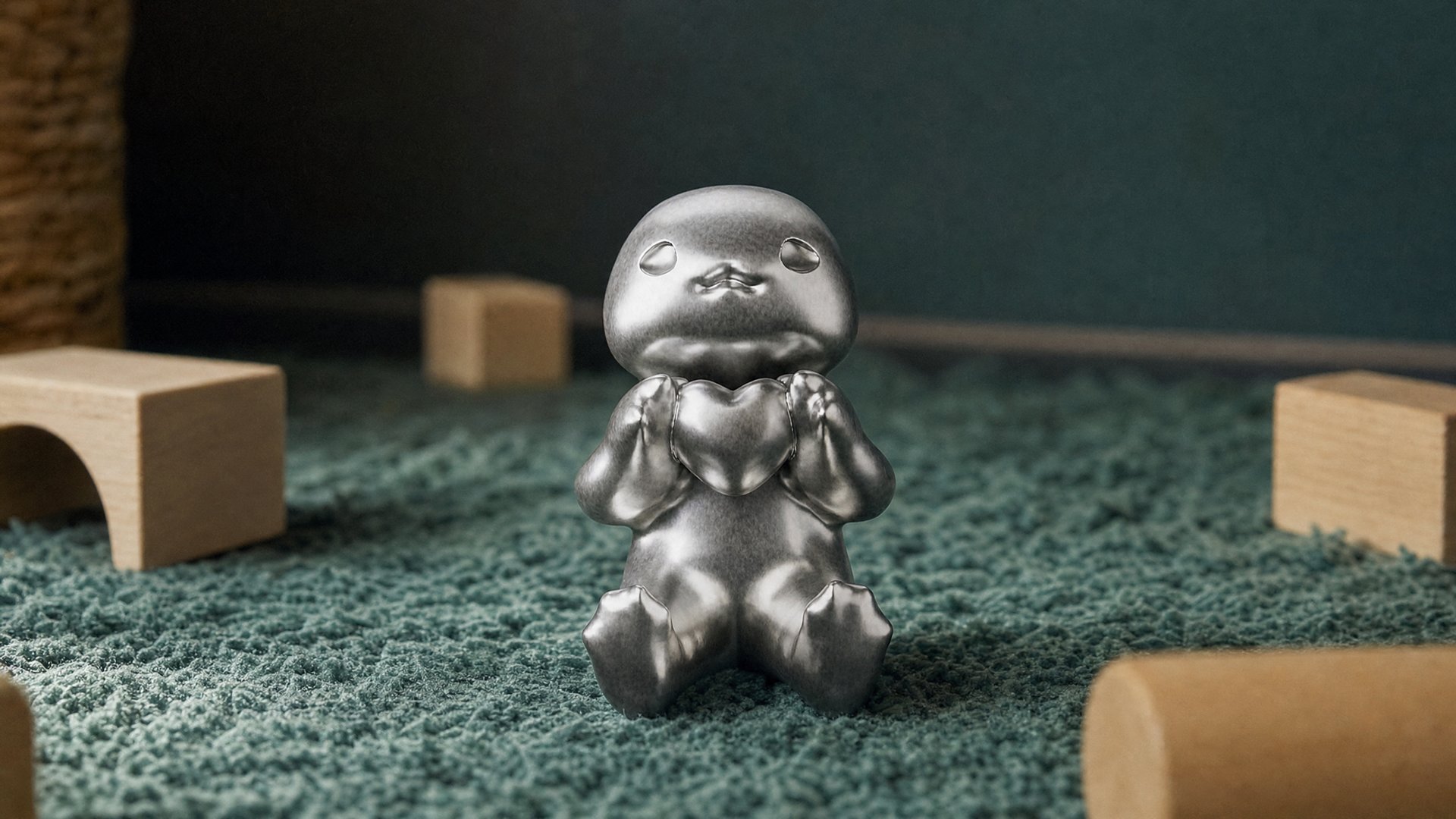
Yes. Kept on a shelf. No. Handed to a toddler. If you’re asking whether silver statues are safe around kids because you want to give one to a family, the short version is that a statue is a solid piece of display metal, not a toy, and once the household treats it that way the question mostly answers itself. Small pieces stay out of small hands. Heavy pieces stay on stable shelves. That’s the whole policy.
Here’s the reasoning behind it, plus what we’d actually pick when the statue is for the kid.
What a silver statue actually is (and isn’t)
Every statue we pour is solid .999 fine silver, all the way through. No hollow shell, no resin core, no plating over pot metal. A 1 oz piece is about 31 grams of metal you can close a fist around. A 32 oz piece is just over two pounds — pick one up and your arm files a report.
That solidity is most of the safety story, good and bad. Good: silver doesn’t shatter. Knock a ceramic figurine off a shelf and you’re picking shards out of the carpet for a week; knock a silver statue off and you’re inspecting the floor, not the statue. Bad: dense metal concentrates its weight into a small footprint, so a fall onto a foot or a tile lands hard.
What a statue is not, under any reading, is a toy. Ours are never tested to toy-safety standards and never marketed to children. They’re made to order over 4–8 weeks to sit on a shelf and be looked at, the same category as a mantel clock or a framed print, except heavier and considerably harder to break.
The short version
- Solid .999 fine silver all the way through — no hollow shell, no plating.
- Silver doesn’t shatter, but dense metal concentrates its weight — the two real risks are small (choking) and heavy (falling).
- Never tested or marketed as a toy — it’s a display piece, same category as a framed print, just heavier.
- House rule: adults handle the statue, kids look.
The two real risks: small and heavy
Skip the vague worry and name the actual hazards. There are two, and they belong to opposite ends of the size ladder.
Small pieces are choking hazards. A 1 oz statue fits in an adult palm, and anything that fits in a palm fits in a toddler’s mouth. This isn’t special to silver. It’s the same rule you already apply to coins, dice, and refrigerator magnets. If there’s a child in the house who still field-tests objects with their mouth, the statue lives up high, full stop. Not on the coffee table for the housewarming week. Up high.
Large pieces are heavy. The bigger sizes flip the problem. Nobody is swallowing a two-pound statue, but a two-pound statue coming off a shelf onto a small person is a genuinely bad afternoon. Placement does the work here: a deep, stable shelf on solid furniture, not a floating ledge over the play corner, and never on a tablecloth or runner a kid can yank like a magician who hasn’t practiced.
Between those two ends, use height as your dial. The younger the kids, the higher the shelf. Families have been running this exact system with breakables for generations, a silver statue just runs it with something that survives the one time the system fails.
Points, edges, and the adult-handling rule
Some designs carry points because the subject demands them. A stag has antlers. A dragon has wing tips. A warrior holds something with an edge on it. Cast in solid metal, those details keep their shape. They don’t flex the way a plastic figure would, so a statue with pronounced points deserves a spot where nobody is reaching past it blind.
Our house rule, and the one we’d hand any gift recipient: adults handle the statue. Kids look.
That rule earns its keep twice. It covers the pinch points and the weight, obviously. But it also protects the piece itself — skin oils are what push silver toward darkening, which is why care is a soft dry cloth and not a dip bath. A statue that’s admired from six inches away and handled twice a year at dusting stays brighter than one that gets picked up daily. The safety habit and the care habit are the same habit.
If the statue is for the kid
Here’s where it gets fun, because “not a toy” doesn’t mean “not for children.” Some of the best statues we ship are bought for a kid, a new-baby gift, a first birthday, a piece that stands on the dresser shelf through the whole childhood and then gets handed over for real at eighteen, with the story of who gave it. The child owns it the entire time. They just don’t hold it yet.
For that job, the catalog has pieces that read young without reading cheap:
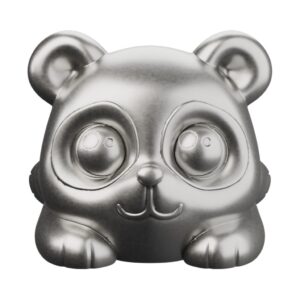
Works over a crib at one, or on a desk at twenty-one
Round, friendly, and grinning — the rare object that reads young without reading cheap.
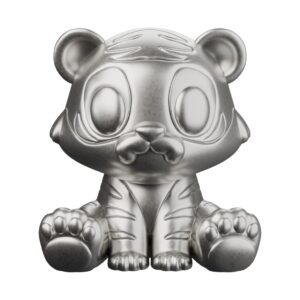
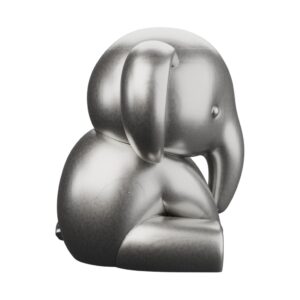
The classic nursery animal
Poured in metal that will outlast every stuffed version by a century or so.
Each one starts at $199 at 1 oz and arrives in a presentation box with a Certificate of Authenticity, a serial number, and the weight and purity stamped into the piece, which matters for a childhood gift, because eighteen years is long enough for everyone to forget what a thing is unless the thing says so itself. The box is also a fine home base: statue comes out for birthdays and visits, statue goes back in, small hands never get a vote.
The honest part
One honest note on timing. Every piece is made to order, and the workshop takes 4–8 weeks from order to doorstep. For a birth or a birthday you can see coming, that’s easy math. For one you can’t, it isn’t — order early or accept that the gift arrives fashionably late with a good excuse.
So: are silver statues safe around kids? As safe as you place them. The metal was never the problem; the metal is the part that shrugs off drops and waits on the high shelf until the kid is old enough to take it down themselves.
Where to start
If you're shopping for a family, start at the gifting hub, and if you want the plain-numbers version of what these pieces are made of and weigh, the fact sheet has it all on one page.