

How to Store Seasonal Silver Pieces
Soft cloth, the original box, one fresh anti-tarnish strip, a closet inside the house. The put-away routine that brings seasonal silver back bright.
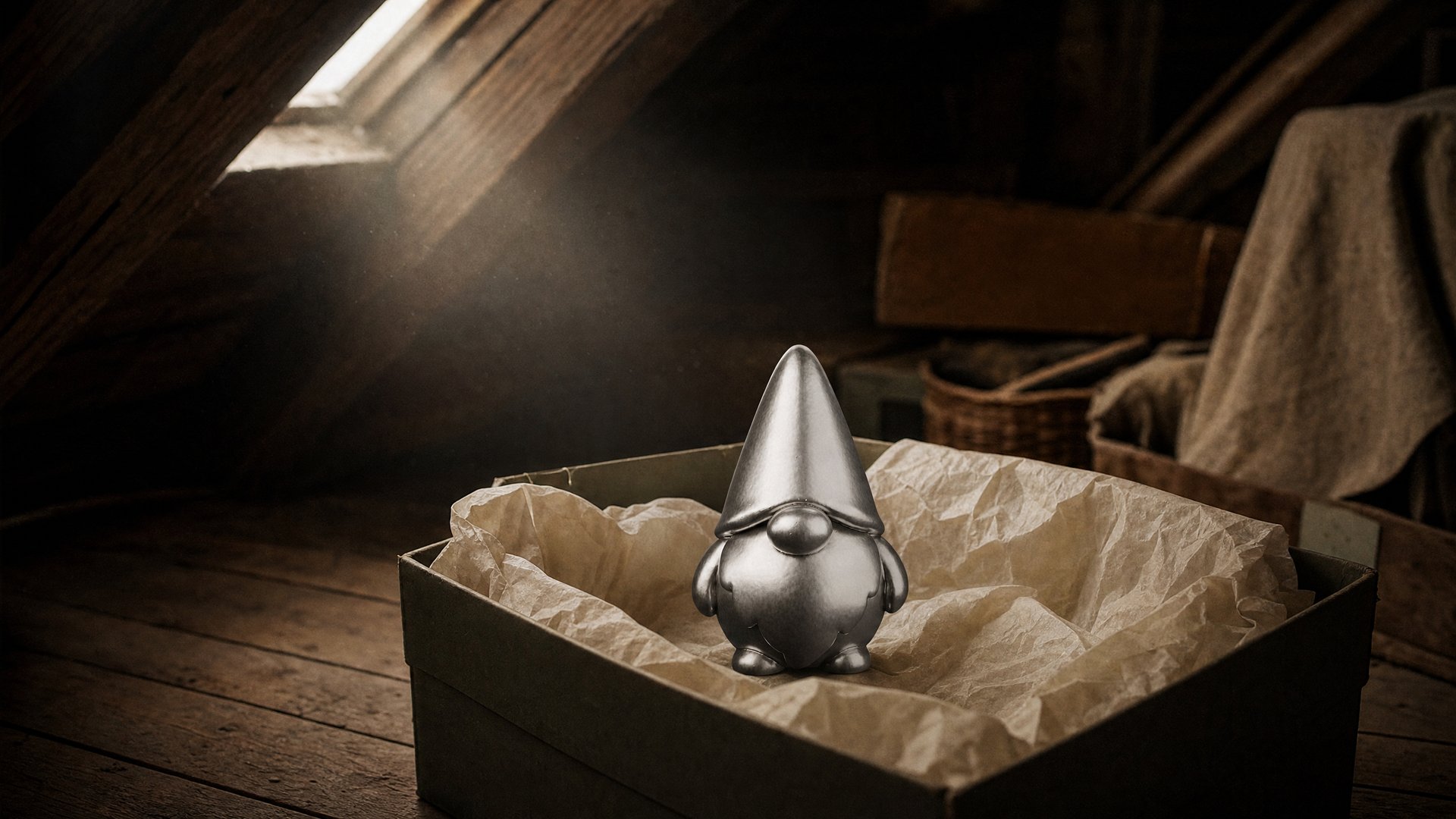
Wipe the piece with a soft dry cloth, wrap it in cotton, set it back in its presentation box with a fresh anti-tarnish strip, and keep that box in a closet inside the house, not the attic, not the garage. That’s the whole method. Ten minutes in January buys you a bright shelf in November.
Everything below is the why, plus the handful of mistakes that quietly undo it.
We pour seasonal pieces in our South Florida workshop knowing they’ll live a strange life: six weeks on the mantel, forty-six in a box. For a piece like the Nutcracker, storage isn’t an afterthought. It’s most of the year.
Why a statue darkens in the box
Silver reacts with traces of sulfur in the air. The result is tarnish, a thin film on the surface that shows up first as a faint yellow cast, then gray. It isn’t damage. It sits on top of the metal, it comes off with a silver cloth, and it never touches the stamped weight or the .999 fine silver underneath.
Here’s the part that matters for storage: the reaction needs air and it needs moisture. Cut off either one and it slows to a crawl. Every step in the routine is a different way of cutting one of them off. The wrap blocks the air. The dry closet starves the humidity. The strip scavenges what sneaks past both.
One honest note before the steps. You can’t stop tarnish completely. Nobody can, it’s chemistry, and an anti-tarnish strip is a slow absorber, not a force field. What you can do is put a piece away so clean and so dry that next season’s touch-up takes thirty seconds instead of an evening.
The short version
- Wipe, wrap, box, strip. Soft dry cloth first, then cotton wrap, back into the presentation box, plus a fresh anti-tarnish strip.
- Tarnish needs air and moisture — every step in the routine cuts off one of them.
- Skip newspaper and rubber bands — ink transfers, and rubber is itself a sulfur source.
- Store in an interior closet, never the attic, garage, or a sunny shelf — the swings in heat and humidity speed up tarnish.
- Every piece is solid .999 fine silver, made to order in 4–8 weeks — plan a December piece as an October decision.
The put-away, step by step
1. Wipe it down first. Skin oils hold moisture and salt against the metal, so a fingerprint left on in January will greet you as a fingerprint in November. Soft dry cloth, nothing else. No paper towels. Paper is mildly abrasive and leaves fine scratches you’ll see in raking light.
2. Deal with any darkening now, not later. A season on the mantel near candles or a fireplace can leave a yellow cast. A silver polishing cloth brings it back. Never a dip, never an abrasive polish, the care rules don’t pause for put-away day, and a dip will cost you more than the tarnish ever would.
3. Wrap it in soft cloth. Cotton or flannel, snug but not tight. The wrap keeps airborne sulfur off the surface and keeps the piece from rubbing against the box through eleven months of door slams and moved furniture. Skip newspaper, the ink transfers. Skip rubber bands entirely; rubber is a sulfur source, which makes it roughly the worst material you can park next to silver.
4. Back into the presentation box it shipped in. This is what the box is for. It’s sized to the piece. It closes fully, and it keeps the Certificate of Authenticity and serial number with the statue instead of in a drawer three rooms away. Piece, papers, box: one unit, one shelf.
5. Drop in a fresh anti-tarnish strip. One per box, replaced at every put-away. The strips absorb the sulfur compounds that cause tarnish, and they wear out doing it. Last year’s strip has already done its job. A pack costs a few dollars at any hardware store and protects a solid silver statue. Cheap insurance is underselling it.
Attics, garages, and other places silver shouldn’t spend the winter
Where the box lives matters more than how carefully you packed it.
The attic swings from freezing to baking and back, and every swing pulls moisture through the cardboard. The garage adds fumes to the humidity. Basements run damp in most of the country. And a shelf in direct sun cooks the box all summer, which speeds up the same chemistry you just worked to slow down.
The right spot is boring on purpose: a closet shelf in an interior room, away from the bathroom’s steam and the kitchen’s everything. Room temperature, low humidity, dark. We run a workshop in South Florida — humidity is a daily opponent here, and the closet rule is not theoretical advice.
The six-week workhorses
Seasonal pieces spend more time in storage than anything else we pour, which is exactly why they repay the routine.

The classic case for a proper put-away
Stands guard from Thanksgiving to New Year’s and sleeps the other forty-six weeks — he’s the first thing out of the box next December.

Small enough to lose without the routine
Small enough to vanish into a junk drawer if he’s not boxed with his papers; the routine is what keeps him findable and bright.

The longest season on the mantel
Works September through Thanksgiving and picks up the most handling — it earns the careful wipe-down before the wrap.

The hardest contract in the catalog
One week of glory in March, fifty-one in the dark, and he comes out grinning anyway.
Each of these is solid .999 fine silver, X-ray tested for purity and weight before it ships. That’s why the storage routine is worth the ten minutes — everything tarnish can touch wipes clean, and the metal itself isn’t going anywhere.
The whole rotation, Santas, snowmen, pumpkins, elves, lives in Holiday & Seasonal. One thing to know before you add to it: every piece is made to order, 4–8 weeks, so the statue you want on the mantel in December is an October decision, not a November one.
Where to start
Put the Santa away right this January. Then go pick what joins him next year, while the calendar is still on your side: Holiday & Seasonal.