

Does Silver Tarnish? What to Expect and What to Do
Yes — all real silver tarnishes, ours included. What the darkening actually is, the five-minute fix with a silver cloth, and when patina is worth keeping.
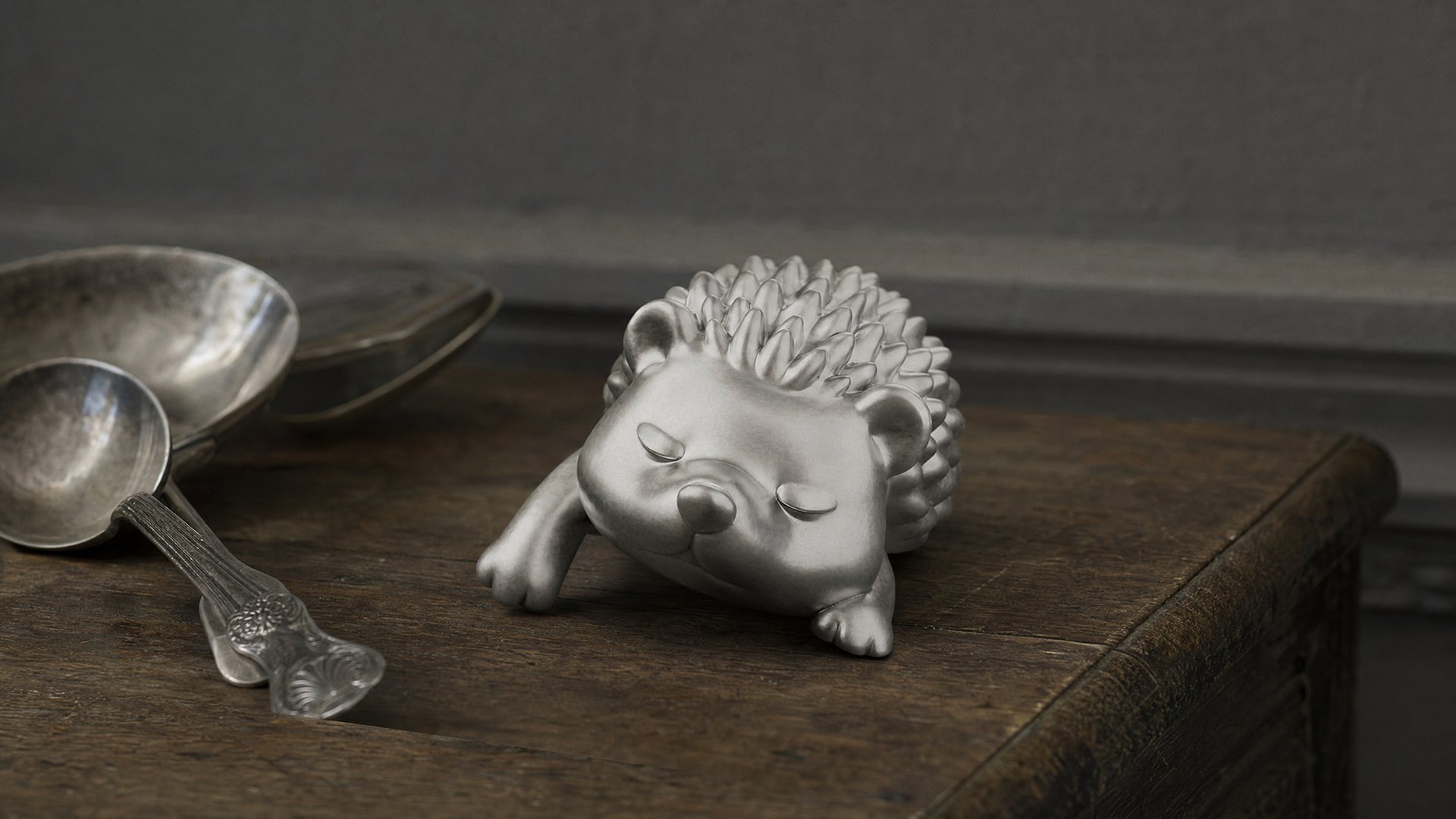
Yes. All real silver tarnishes, including every statue we pour, and anyone who tells you their silver never darkens is selling you something that isn’t silver.
That answer scares off more gift buyers than it should, so let’s put the whole thing on the table. Tarnish is a surface film, not damage. It comes off with a cloth in a few minutes. It never touches the metal underneath, and on some pieces it is the best thing that ever happens to them. We have been pouring .999 fine silver in our South Florida workshop since 2004, which means we have watched a lot of silver age. Here is what actually happens and what to do about it.
What tarnish is, chemically and honestly
Silver reacts with trace sulfur in the air, the same compounds that come off eggs, rubber bands, wool, and city air generally, and forms a thin darkened layer of silver sulfide on the surface. That’s the whole event. It starts as a faint yellow warmth, deepens toward amber, and eventually goes gray-black if you leave it alone for years.
Two things it is not. It is not rust: rust eats iron structurally, flaking it away until the metal fails, while tarnish sits on top of silver like breath on a window. And it is not a defect. A silver statue that has darkened has lost nothing, not a grain of weight, not a dollar of value. The metal underneath is exactly the metal that left the workshop, which is why our buy-back program pays the same 95–98% of the day’s silver spot for a tarnished piece as for a bright one. Weight is weight.
Worth knowing while you’re comparing gifts: purity matters here. Sterling silver is 92.5% silver alloyed with copper, and the copper is eager to react, so sterling darkens noticeably faster. Fine silver, the .999 grade, the only one we pour — has almost nothing in it but silver, so it tarnishes slowly and evenly. Every piece is X-ray tested for purity and weight before it ships, and the stamp on the statue says what the metal is. Slow is still not never. Chemistry doesn’t do never.
The short version
- Yes — all real silver tarnishes, ours included. Anyone promising silver that never darkens is selling something that isn’t silver.
- It’s a surface film, not rust and not a defect. Not a grain of weight lost, not a dollar of value — buy-back pays the same for a dark piece as a bright one.
- The fix is a cloth. Soft and dry for dust, a treated silver cloth for darkening. Never abrasive polish, never chemical dips — a scratch is permanent, a dip strips the detail.
- On a textured piece, tarnish is the look. Dark recesses, bright high edges. That’s patina, and it’s reversible either way.
- Placement beats polishing. Out of sun and humidity, never the bathroom shelf; anti-tarnish strips in the box for storage.
The five-minute fix
For a piece on open display, care is one habit: a soft dry cloth, the same pass you’d give the shelf it sits on. Dust carries sulfur compounds, so the wipe that keeps a statue clean is also the wipe that keeps it bright.
When darkening does show up, use a silver polishing cloth, the treated kind sold anywhere silver is sold, a few dollars, lasts years. Work it over the surface and the film comes away; the shine underneath was there the whole time. A statue that has sat untouched for a year comes back in an evening in front of the TV. One that gets a wipe now and then never gets that far.
Two things to never use, and this part matters more than the rest. No abrasive polish, the gritty pastes made for scrubbing pots will genuinely scratch a mirror finish, and unlike tarnish, a scratch is permanent. And no chemical dips, ever. The dip strips everything at once, including the fine surface a hand spent hours refining, and on a detailed casting it pools in the recesses and leaves them chalky. Cloth only. Slower, safer, and honestly kind of satisfying.
The statue that rewards this routine most is the Polished Skull, a smooth mirror form with nowhere to hide, so it shows the first haze of tarnish early and gives all of it back to a two-minute wipe. If the person you’re buying for is the type who keeps their boots conditioned and their knives sharp, that little ritual is a feature of the gift, not a chore attached to it.
When you should leave the tarnish alone
Here is the part the care guides skip: on the right piece, tarnish is the look.
Museums have a word for it, patina, and conservators will fight you before they let you polish a centuries-old bronze back to shiny. Darkening settles into the low points of a sculpture first: the grooves, the undercuts, the texture a designer put there on purpose. The raised surfaces stay bright where hands and cloth touch them. The result is contrast, and contrast is depth. Detail that read as subtle on day one turns bold.
The Viking Warrior is the clearest case in our catalog. Braided beard, layered mail, weathered shield, every one of those textures gains when the recesses go dark and the high edges keep their gleam. Polish the raised surfaces with the cloth, skip the crevices, and in a year the piece looks like it was carried over a mountain range, which for a warrior is precisely correct. Same logic holds for a skull or anything with a blade.
So decide by the statue, not by a rule. Serene pieces tend to want brightness. Fierce ones can wear some age. Both are legitimate, both are reversible, and the person you give it to gets to choose — that choice is part of owning solid metal.
Where it lives decides how fast it happens
Placement does more than polishing does. Keep silver out of direct sun and away from humidity, the bathroom shelf is the worst room in the house for it, and a kitchen windowsill is not much better. A living room shelf or a study is fine, and a piece in a spot like that may go a very long time between cloths. Something handled or left open to the room, like the Lotus Bloom Bowl, earns its keep exactly because it’s out and touchable — just give it the dusting pass when you do the shelf and it stays bright on its own schedule.
For storage, a piece being put away for a season, or a gift bought ahead of the occasion, drop a couple of anti-tarnish strips in with it. They’re cheap. They absorb the sulfur before the silver can, and the presentation box every statue arrives in is a good home base. A statue boxed with strips comes out looking the way it went in.
Where to start
None of this asks much. A cloth, a sensible shelf, a strip of paper in the box.