

How to Display Silver Statues at Home
Light from above and slightly aside, vary the heights, keep it off the sunny sill. How to display silver statues at home, from the people who pour them.
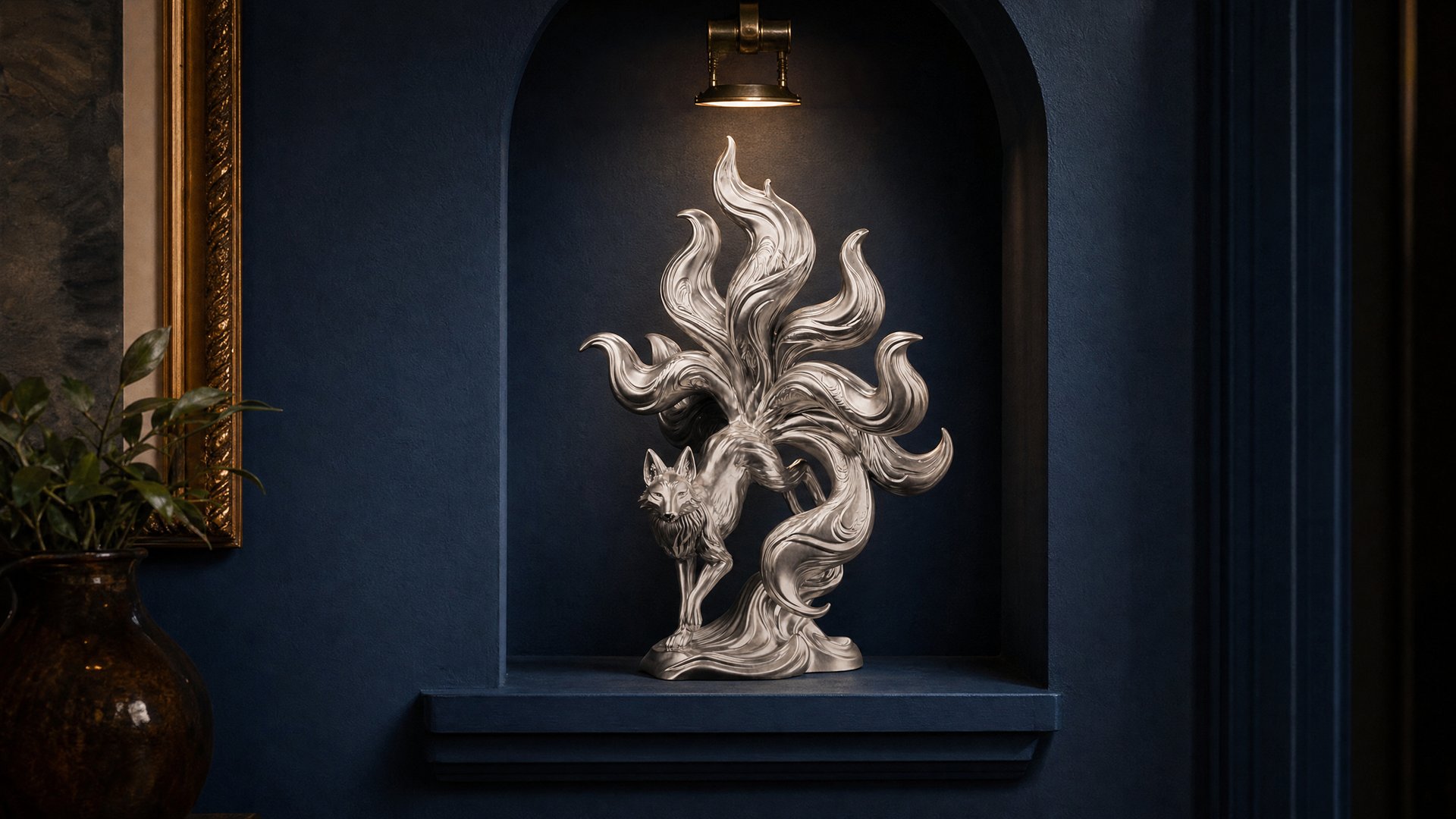
Light it from above and slightly to one side, set it against a dark, plain background, and give it room. That’s most of it. Silver rewards one good directional light more than any other material we work with, because everything you love about a silver statue is really shadow: the raking light that catches a stag’s antlers or the fluting on a column is doing the same job a gallery spotlight does.
We pour these pieces in our South Florida workshop, then customers send us photos of where they ended up. Some statues land on a dedicated shelf with a puck light and look like they cost double. Some get parked next to a router. Same statue, same metal, completely different result. The difference is maybe forty dollars of hardware and ten minutes of thought, so here is the thinking, borrowed from how museums do it.
The short version
- One light, above and off-axis — 30–45 degrees down, pushed to one side, warm white around 2700–3000K.
- Stagger heights, don’t line objects up. Tallest off-center, mid-height near it, something low and horizontal in front.
- Dark backdrop, always. Silver against white walls goes invisible; navy, charcoal, or dark wood makes it jump forward.
- Skip the windowsill, bathroom, and kitchen. Heat, humidity, and cooking sulfur all speed up tarnish.
- One substantial piece beats a crowd of small ones — weight shows on a shelf, even from across the room.
One light, above and off-axis
Galleries almost never light sculpture head-on. Flat frontal light kills the modeling, the piece goes gray and shapeless, like a photo taken with on-camera flash. The standard museum setup is a single light above the piece, angled down at roughly 30 to 45 degrees, and pushed off to one side so shadows fall across the form instead of straight behind it.
At home that translates to simple gear. A battery puck light stuck to the underside of the shelf above. A small LED spot on the bookcase rail. A picture light on a mantel. Warm white, around 2700–3000K, flatters silver; cold blue-white LEDs make it look like stainless steel, and silver deserves better than looking like a sink.
Two pieces from our catalog show why the angle matters. The Apollo Classical Bust is a portrait, and portraits want that classic top-side key light. It drops the brow and cheekbone into shadow and suddenly the face has weather in it. The Standing Stag is the opposite problem: a tall vertical piece with open antlers, and it looks best when light comes from behind and above so the rack reads as silhouette first, metal second. Try both positions with a flashlight before you commit the hardware. Thirty seconds of moving a beam around the piece tells you more than any diagram.
Vary the heights, and stop centering everything
The most common display mistake isn’t lighting. It’s the police lineup: four objects, one shelf, all the same height, evenly spaced. The eye reads it as inventory and moves on.
Galleries stagger. Put your tallest piece off-center, a mid-height piece near it, and something low and horizontal in front, the eye enters at the top and travels down and across, which is the whole trick. A stack of two or three hardcover books is a perfectly respectable pedestal. So is an upturned box in a fabric you like. Museums use painted plinths worth less than the books.
Horizontal pieces earn their keep here. The Sleek Panther is a long, low form built for a mantel or console table, where light traveling down its back does the work. It’s the piece you set in front of taller neighbors, not beside them. And an architectural piece like The Parthenon wants a low platform and light raking across the colonnade at an angle, so every column throws its own shadow. Set it flat under a ceiling fixture and you get a gray box. Rake the light and you get ruins at sunset.
Backdrop matters more than people expect. Silver against white walls goes invisible; polished metal is basically a mirror, and a mirror in front of white reflects white. Deep green, navy, charcoal, or dark wood makes the metal jump forward. If a dark wall isn’t happening, a dark matte object behind the statue, books, a runner, the shadowed back of a cabinet, does the same job.
Four pieces that show the technique
Each of the statues named above illustrates a different lighting or staging problem worth solving on purpose.

Wants a top-side key light
A portrait piece. Classic overhead light drops the brow and cheekbone into shadow, and the face suddenly has weather in it.

Wants light from behind and above
A tall vertical piece with open antlers. Backlit from above, the rack reads as silhouette first, metal second.
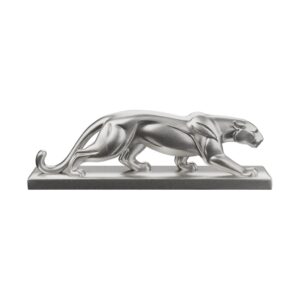
The low horizontal anchor
A long, low form built for a mantel or console table, where light traveling down its back does the work. Set it in front of taller neighbors, not beside them.
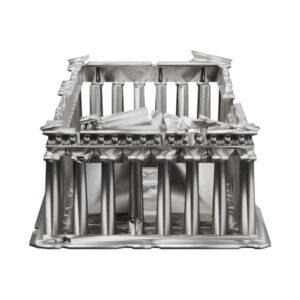
Wants a low platform and raking light
Set flat under a ceiling fixture, it’s a gray box. Rake the light across the colonnade and every column throws its own shadow — ruins at sunset.
Where not to put it
The honest part
This is the honest part. Silver is a living metal. It darkens with exposure, and where you put the statue decides how often you’ll deal with that.
Skip the sunny windowsill. Direct sun won’t hurt the silver, but heat and the humidity swings that come with it speed up tarnish, and a statue backlit by a bright window all day reads as a black cutout anyway. The bathroom shelf is out for the same reason. Humidity. The kitchen is worse: airborne grease films onto metal, sulfur in the air from cooking (eggs are a real offender) accelerates darkening, and you’ll be cleaning it monthly instead of yearly.
The good spots are the ones you’d pick anyway: interior walls, bookshelves, mantels, a desk, a closed-front cabinet. If the piece lives behind glass, drop a couple of anti-tarnish strips in the case, they’re cheap, they last months, and they quietly absorb the compounds that darken silver.
Maintenance at a good location is almost nothing. Dust with a soft dry cloth when you dust the shelf. If the piece starts to darken, a silver cloth brings it back in a minute or two. Never use abrasive polish and never use a chemical dip, dips strip the surface indiscriminately and will flatten the deliberate contrast between polished high points and darker recesses that our finishers spend a full stage of production building in. The patina in the low spots is not neglect. It’s the detail.
Build the shelf around one piece, not ten
A last opinion from the workshop: one substantial statue displayed well beats a crowd of small objects every time. Our pieces run ten sizes, from 1 oz at $199 up to 32 oz at $4,800, and the difference between a 2 oz and a 12 oz statue on a shelf is not subtle, weight shows, even from across the room. If you’re starting a display from scratch, pick the single piece that carries the shelf, give it the light and the dark backdrop, and let everything else on that shelf be supporting cast.
Each statue arrives ready for this job, solid .999 fine silver, X-ray tested for purity and weight, with a serial-numbered Certificate of Authenticity you can file away while the piece itself does the talking. These are made to order, so allow 4–8 weeks; the shelf can wait, and the puck light gives you something to do in the meantime.
Where to start
Browse the full catalog with your spot in mind, or start with Art & Decor, the collection we designed for exactly this: pieces meant to hold a room from a shelf.