

Mirror or Matte: Choosing a Finish for a Silver Piece
Mirror for bold shapes, matte for fine detail. How each finish handles light, rooms, and fingerprints — from the workshop that pours the silver.
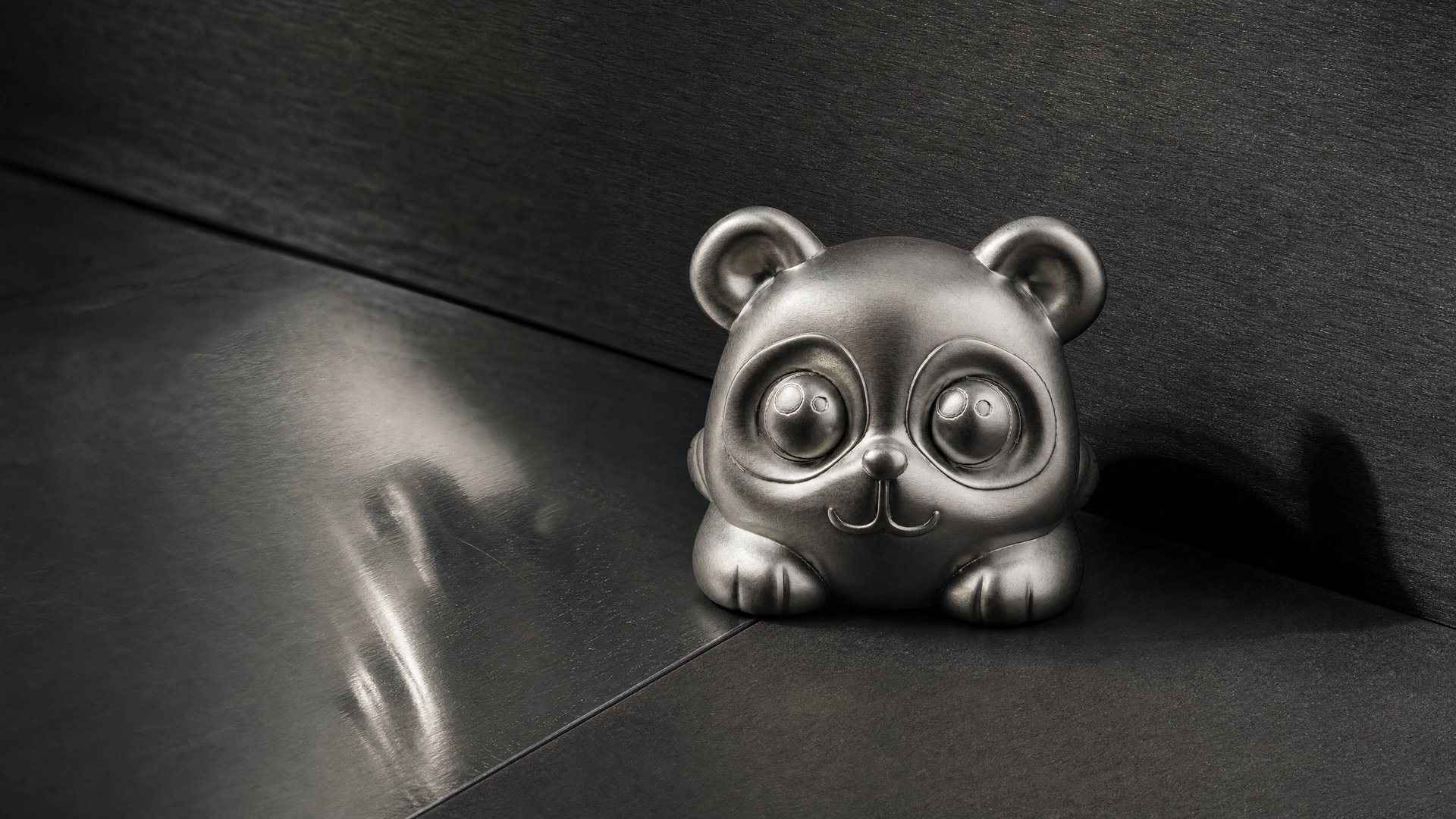
Mirror if the piece lives on its shape. Matte if it lives on its detail. That is the working rule at our bench, and it settles most finish questions before they start.
The longer answer is worth five minutes, because finish changes what a silver statue does in a room more than size does. The same solid silver, the same .999 stamp on the base, and two completely different objects, depending on how the surface leaves the polishing wheel.
What a mirror finish actually does
A mirror polish turns the surface into exactly that: a mirror. The piece stops having a color of its own and starts borrowing the room’s. Put a high-polish statue near a window and it carries daylight. Put it under one warm lamp in a dark study and it glows like it’s lit from inside.
That borrowing is the whole appeal. It is also the catch.
A mirrored surface flattens fine detail. Light skates across it, so shallow texture, fur, feathers, engraved linework, washes out at any distance past arm’s length. Mirror finishes belong on pieces with strong, simple geometry, where the silhouette does the talking and the shine does the shouting.
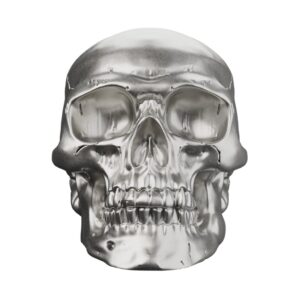
Mirror, no detail to lose
No fur to lose, no drapery to flatten — one iconic form, polished until it reflects the whole room back at you.
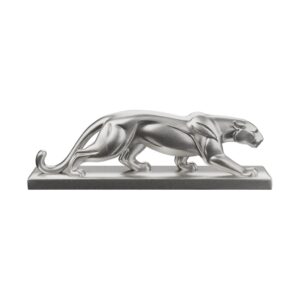
Mirror, in motion
Long smooth muscle planes that a high shine turns into liquid metal mid-stride.
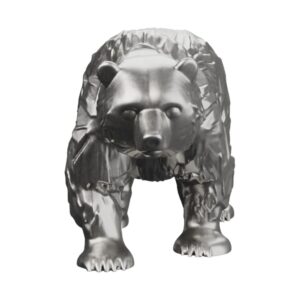
Matte, made for texture
Texture top to bottom, tooled, faceted surfaces over heavy shoulders — a softer finish is what lets you read every cut from across the room.

The third road
Faceted Cat Silhouette Silver Statue
Flat geometric planes, each one an individual small mirror set at its own angle — the flash of polished silver without a single glaring hot spot.
One thing we’ll say straight because you’d notice within a week anyway: mirror surfaces show fingerprints. Every handler leaves a mark, and every mark shows. A soft dry cloth takes prints off in seconds, but if the piece is headed for a hallway table where guests will pick it up, know that you, or its new owner, will be wiping it down now and then. Some people enjoy that small ritual. Some don’t.
The short version
- Mirror if the piece lives on its shape. Matte if it lives on its detail. That’s the working rule.
- Mirror borrows the room’s light — glows near windows or under a warm lamp — but it flattens fine texture and shows fingerprints.
- Matte scatters light evenly, so carved detail reads from across the room, and it shrugs off daily handling.
- Let the room decide: bright windows or one warm lamp favor mirror; flat overhead lighting (most offices, most kitchens) favors matte.
- Catalog pieces ship in the finish they were designed for; on a custom commission the finish is yours to call, before anything is cast.
Where matte earns its keep
A matte or satin surface scatters light instead of bouncing it. The metal reads as a soft gray-white from every angle, no hot spots, no glare, and that even light is precisely what carved detail needs to be seen.
Every ridge and hollow on a textured piece catches its own small shadow under a matte finish. Fur reads as fur. Fabric reads as fabric. Stand three feet back and the detail still carries, where a mirror polish would have turned it into blur and glare.
Matte is also the forgiving choice. Fingerprints barely register. Overhead lighting can’t glare off it. If the gift is going to someone who will not baby it, a desk piece, a workshop shelf, matte shrugs off daily life in a way mirror never will.
The trade: matte doesn’t perform. It won’t catch a visitor’s eye from across the room the way a polished piece does. It sits quietly and rewards the person who walks up close. Whether that’s a flaw depends entirely on who you’re buying for.
The room decides more than you think
Before you pick a finish, picture the exact shelf.
Bright room, big windows, lots of movement: mirror. The piece animates all day as the light shifts, and that’s the show you paid for. Dim room, one lamp, a bookshelf or a study: this is where mirror does its best work too, a single warm light source on high polish is the oldest trick in silver. Even, flat overhead lighting, most offices, most kitchens: matte. Mirror under fluorescents mostly reflects the ceiling.
And if the answer is “no idea, it’s a gift” — matte texture travels better into an unknown room. A detailed piece looks intentional anywhere. A mirror piece wants staging.
If you want to choose the finish yourself
Everything above applies to picking from the catalog, where each design ships in the finish it was designed for. Ten standard sizes run 1 to 32 ounces, $199 to $4,800, and the surface treatment is part of the design, the refinishing stage is one of the eight hand-worked steps every order passes through before it ships.
On a custom commission, the surface is yours to call. Upload up to four photos, tell our designers where the piece will live and how you want it to behave there, and you’ll see proofs in 5 to 7 business days. Nothing gets cast until you approve in writing — which means the mirror-or-matte conversation happens on paper, when changing your mind costs nothing. Once it’s poured, that design is retired forever. One person on earth owns it.
Either way, the metal underneath is identical: solid .999 fine silver, one grade across everything we make, X-ray tested for purity and weight before it leaves the workshop. Finish is surface-deep by definition. The value is solid all the way through.
The honest part
Two practical notes before you order. Made-to-order takes 4 to 8 weeks — plan backward from the date that matters. And whichever finish arrives, care is the same short list: soft dry cloth, a silver cloth if it ever darkens, never abrasive polish, never dips. Mirror pieces just meet the cloth a little more often.
Where to start
Still torn? Browse the full catalog with the shelf in mind, not the screen, or bring the question to a commission and let the proofs settle it before a single ounce is poured.