
What Is X-Ray Testing on Silver?
X-ray fluorescence reads a statue's exact metal content in seconds, without a scratch. How every piece gets verified .999 fine silver before it ships.
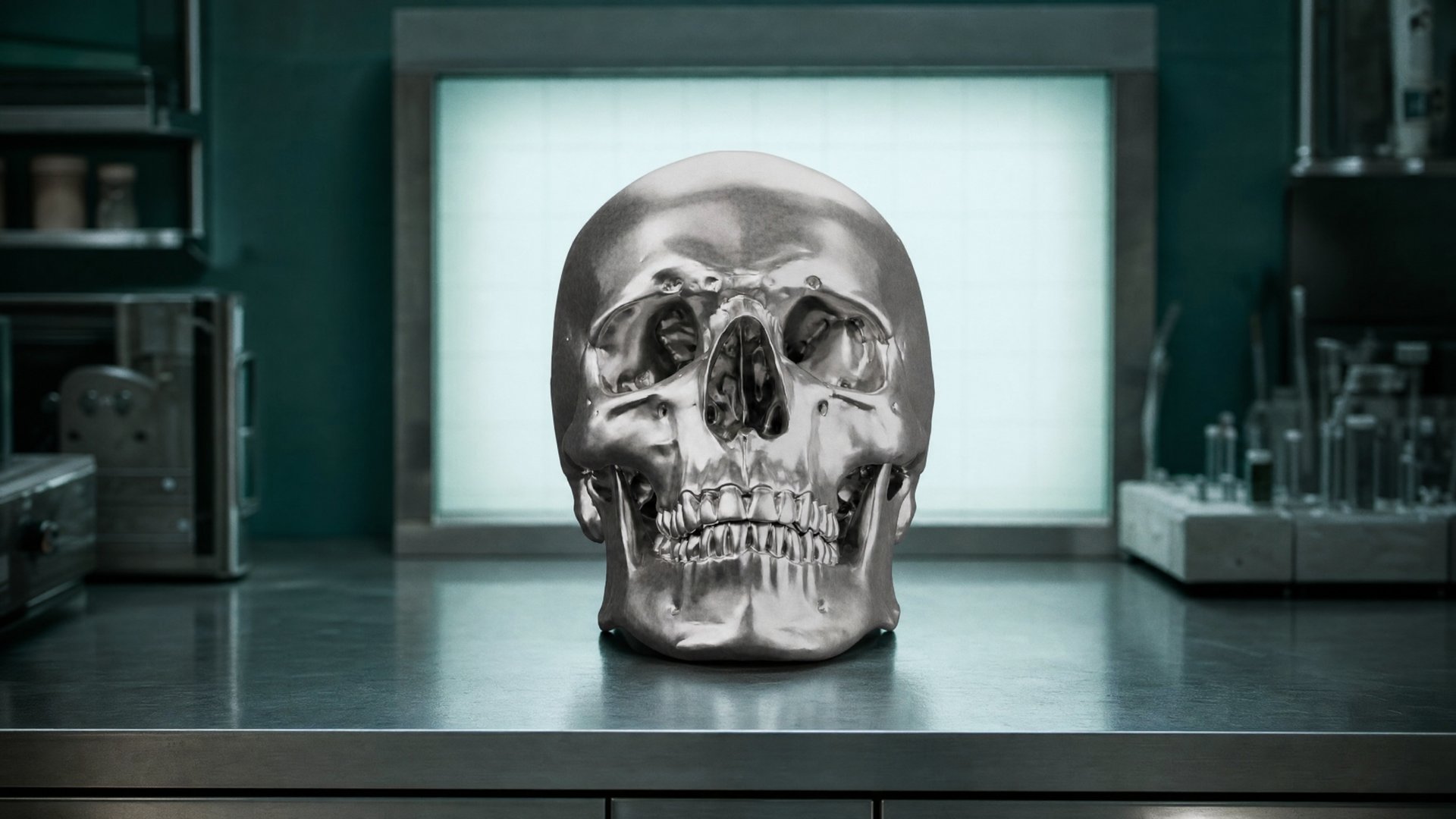
X-ray testing on silver, the full name is X-ray fluorescence, XRF on the bench, reads the elemental makeup of a metal object without cutting it or melting a corner off. Point the instrument at a statue and a few seconds later you have a number: what percentage of the thing in front of you is actually silver.
Every statue that leaves our workshop takes that test before it ships, along with a weight check. The result gets recorded, the piece gets stamped with its weight and purity, and a Certificate of Authenticity with its own serial number goes in the box. Here’s what the machine actually sees, and why a family workshop that pours its own metal still bothers to test it.
The machine reads atoms, not stamps
A stamp can be faked. A hallmark can be struck into anything. Atoms can’t lie.
XRF works because every element answers X-rays in its own voice. Fire a beam at a metal surface and the atoms inside absorb that energy for an instant, then release it back out at wavelengths specific to each element — silver at silver’s signature, copper at copper’s, zinc at zinc’s. A detector counts what comes back and turns the tally into percentages. If the readout says 99.9% silver, that’s not an opinion about the piece. It’s a census of it.
The older tests all cost the object something. An acid test means scratching the surface and watching how the streak reacts. A fire assay, still the deep gold standard, means cutting a sample and destroying it in the process. XRF touches nothing. A finished statue goes under the beam and comes out exactly as it went in, which is the whole point when the piece being tested is the product.
One honest caveat: XRF reads the surface, not the core. On its own, a surface read can be flattered by heavy plating over a base-metal body. That’s why our check is purity and weight together. Silver is a dense metal, and a statue cast around a cheaper core won’t land on its catalog weight. The two numbers have to agree before anything ships.
The short version
- X-ray fluorescence (XRF) reads a metal’s elemental makeup without cutting, scratching, or melting a corner off.
- Atoms can’t lie — unlike a stamp or hallmark, which can be struck into anything.
- The reading is checked against weight, too — a plated piece over a cheap core won’t land on its catalog weight even if the surface reads silver.
- We pour every statue ourselves, but we test it anyway — the documentation is for everyone who wasn’t standing at the pour: the recipient, an appraiser, a grandkid decades from now.
- It’s also what backs the buy-back program — 95–98% of spot for the metal weight, any time.
We poured it. We still test it.
We know what went into the crucible. One grade across the whole catalog — solid .999 fine silver, every piece, no menu of purities to squint at. So why test metal we melted ourselves?
Because the test isn’t for us. It’s for everyone who wasn’t standing at the pour.
You weren’t there. Neither was the person you’re giving the statue to, or the appraiser who looks at it in ten years, or the grandkid who inherits it in forty. Trust doesn’t travel well; documentation does. The stamped numbers and the certificate in the box are the pour, written down in a form a stranger can check.
It’s also what makes our buy-back program possible. We’ll buy any statue back at 95–98% of the day’s silver spot for its metal weight, any time. That’s a floor under the gift, not a pitch, these are art pieces, not bullion, but a floor only holds if the weight and purity underneath it are verified, and ours are, piece by piece, before the box closes.
What the certificate means to the person you give it to
Most “silver” gifts sold in this country are plated. A film of silver measured in microns over zinc or copper, worth almost nothing the day after it’s unwrapped. The person receiving one usually never finds out. That’s the polite tragedy of it.
Hand someone a tested piece and the gift changes category. It has a document. It can go on an insurance policy. It can be sold back. Though in twenty-two years of pouring we’ve noticed people mostly don’t.
A few pieces where the verification carries real weight:
The confirmation gift
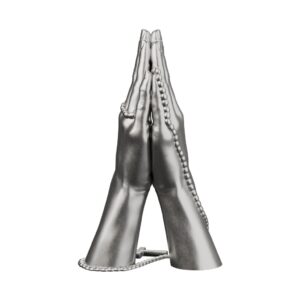
Praying Hands Silver Sculpture
The classic confirmation and first-communion gift. When a piece marks a promise, the giver usually wants “real silver” to be literally, provably true — this is the one we’d hand across with the certificate facing up.

For the collector who asks first
Odin the Allfather Silver Statue
Deep relief, a lot of surface. Collectors ask the purity question first and hardest — this is the answer already written down.
The kilo-scale showpiece
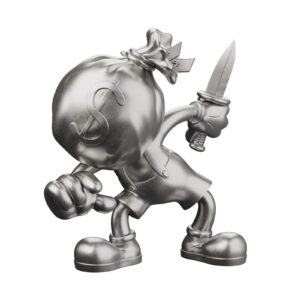
Our artist-collab showpiece, available at kilo scale. At that weight the gap between plated and solid runs to thousands of dollars — the X-ray is what closes the argument.
The full spec sheet, purity, weights, pricing ladder, buy-back terms, lives on one page at our fact sheet if you want the numbers without the prose.
The part that takes patience
The honest part
Testing is nearly the last gate in an eight-stage process, and the process is not fast. Every statue is made to order, designed, printed, cast, refined, stamped, then shipped, and that takes 4–8 weeks. You get an email at every stage and a live progress bar in your account, but no amount of refreshing hurries a crucible.
If the gift has a date on it, count backward. For Christmas, that means ordering by roughly mid-October. The statue that arrives is one nobody has ever owned, tested and boxed with its papers, which is a decent trade for a few weeks of waiting, but it is a trade, and we’d rather say so here than surprise you in November.
Where to start
Curious what happens in the seven stages before the X-ray? Read how a statue is actually made — pour to box, no varnish on it.