

What Is Hand-Pouring? Why We Don’t Mass-Produce
Hand-pouring: silver melted in a crucible and poured for one order at a time, not stamped by the thousand. How we do it, and why the wait is the point.
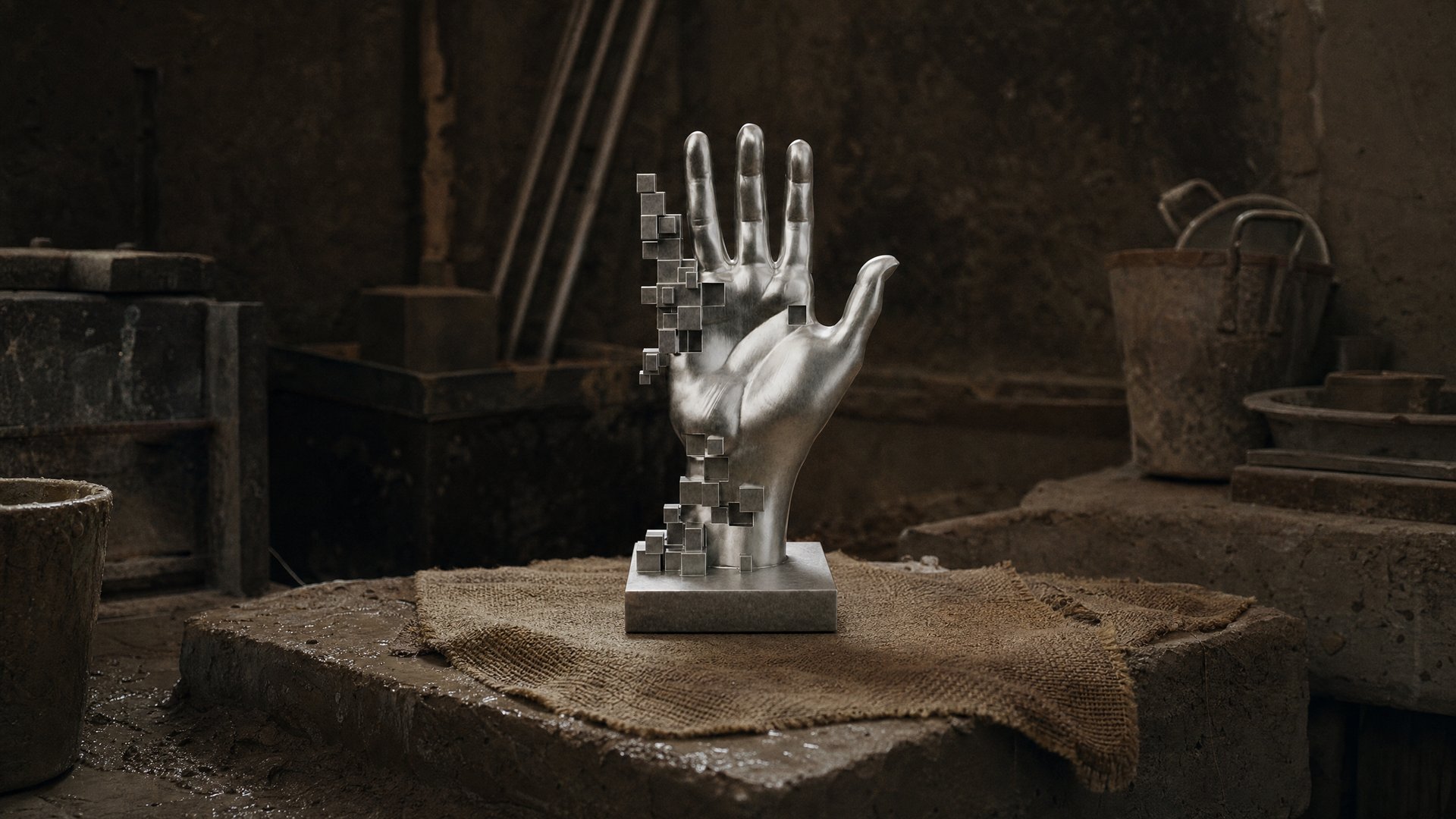
Hand-pouring means a person melts silver in a crucible and pours it into a mold, one statue at a time, for an order that already exists. Mass production means a press stamps a design out of steel dies ten thousand times before anyone has asked for it. That’s the whole answer. The rest is why we chose the slow side of that line back in 2004 and never crossed over.
We’re a family workshop in South Florida. About 770 original designs across 15 collections, and every one of them gets poured after it’s ordered. There is no warehouse of finished statues waiting for buyers. There’s a crucible and a queue.
The short version
- Nothing is made until it’s ordered. No warehouse of finished statues — a crucible and a queue.
- Eight tracked stages, New Order through Complete, with an email at each and a live progress bar in your account.
- A press can’t do air. Open, three-dimensional forms have to be poured; stamping only manages shallow relief.
- Every piece is X-ray tested for purity and weight before it ships — solid .999 fine silver, one grade, no exceptions.
- The tradeoff is time: 4–8 weeks, because the metal is melted after you click buy, not before.
What happens after you order
Your statue moves through eight hand-worked stages: New Order, Design, 3D Printing, Casting, Refinishing, Stamping, Shipping, Complete. An email goes out as your piece clears each one, and the “Your Order Journey” bar at sygusa.com/my-account shows where it sits on the bench right now.
The middle of that chain is what people mean by hand pouring. The design is printed, a mold is made from it, and solid .999 fine silver goes into the crucible. One pour fills one mold. What comes out is a raw casting, and raw castings are never finished — a person spends real hours refinishing it, working detail the mold softened and cleaning edges the pour left rough, because the distance between “cast” and “done” is exactly the distance between a factory and a workshop. Then the weight and purity get stamped into the metal, and before anything ships, the piece is X-ray tested to confirm both.
We photographed the whole thing, stage by stage, in how your statue gets made.
What a stamping press can’t do
Credit where it’s due: stamping is fast and cheap. If the goal is ten thousand identical flat rounds, a die press is the right machine, which is why mints use them.
But a press squeezes metal between two shallow faces. It does relief. It can’t do air.
Four pieces from our shelves make the point better than we can explain it.
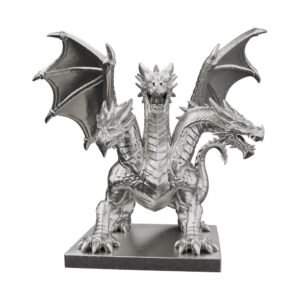
The one no die could strike
Three necks leaving one body, each a separate channel the molten silver has to find and fill. For the reader who loves monsters and myth, this piece makes the whole argument by itself.
The comeback gift
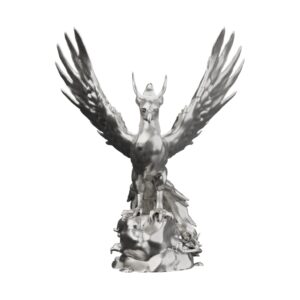
Motion caught in metal, a bird pulling upward out of its own flames. People give it to someone marking a comeback, and the meaning holds because it’s one solid object rising off its base, poured in a single go.
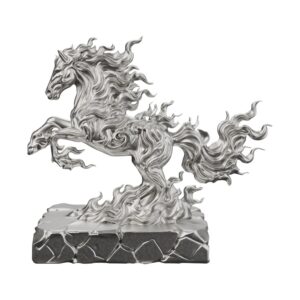
The end of the horse-mug streak
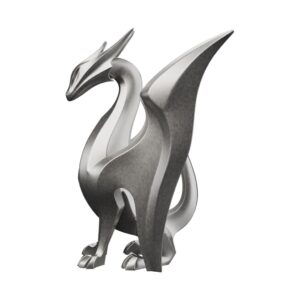
For the horse person you’ve been giving horse-adjacent gifts to for a decade — mugs, prints, calendars. This ends that streak.
There’s also the plain math of giving. A stamped round exists in editions of thousands, and the person you hand it to can find the identical object with one search. A poured statue was made because you ordered it, finished by a person who had your order number in front of them. No run of thousands exists. Nobody else got one this week.
The wait, stated plainly
Made to order means a wait, and ours is 4–8 weeks. We won’t dress that up. The silver for your piece gets melted after you order it, and the refinishing hours don’t shrink because December is getting close. If you want it under a tree in December, order by mid-October. Later than that and you’re wrapping a photo of a statue, which we don’t recommend.
Here’s what the wait buys. Nothing is ever “sold out,” because nothing was ever in stock; a new design can be ordered the hour it’s released. And a statue that just left the workshop is a gift nobody has seen before, let alone owns.
Ten standard sizes run from 1 oz to 32 oz on one price ladder, $199 to $4,800, though availability varies by design. Gift cards start at $199 if the size decision belongs to someone else. And if you’d rather hold a piece before deciding, we keep two showrooms open Monday through Friday, 10–6 ET: Fort Lauderdale at 3562 N. Ocean Blvd and Hollywood at 5224 S State Road 7, or call 954-951-8926.
What lands on the doorstep
FedEx, fully insured, adult signature required, anywhere in the US including Alaska and Hawaii — and the carrier rate passes through with no markup. Inside the box: the statue in its presentation case, a Certificate of Authenticity with its serial number, the weight and purity stamped into the metal, and a limited lifetime warranty against defects. Checkout takes major cards, Apple Pay, Google Pay, and Affirm or Klarna if you’d rather split it.
Care is nearly nothing. A soft dry cloth, a silver cloth if it ever darkens, and no abrasive polish, ever. Solid silver forgives neglect; plating doesn’t.
One more thing, because it’s the quiet advantage of pouring real silver instead of plating something hollow. We buy statues back at 95–98% of the day’s silver spot for the metal weight, any time. That’s a floor, never an investment pitch. These are art. The metal just means the gift can’t go to zero, which is more than anyone can say for a gadget.
Where to start
The crucible doesn't go on the heat until you order. Browse the catalog and put one in the queue.