

Are Silver Statues an Investment?
No — and we sell them. A silver statue is art with a metal floor: 95–98% of spot buy-back on the metal, any time. The honest math from the workshop.
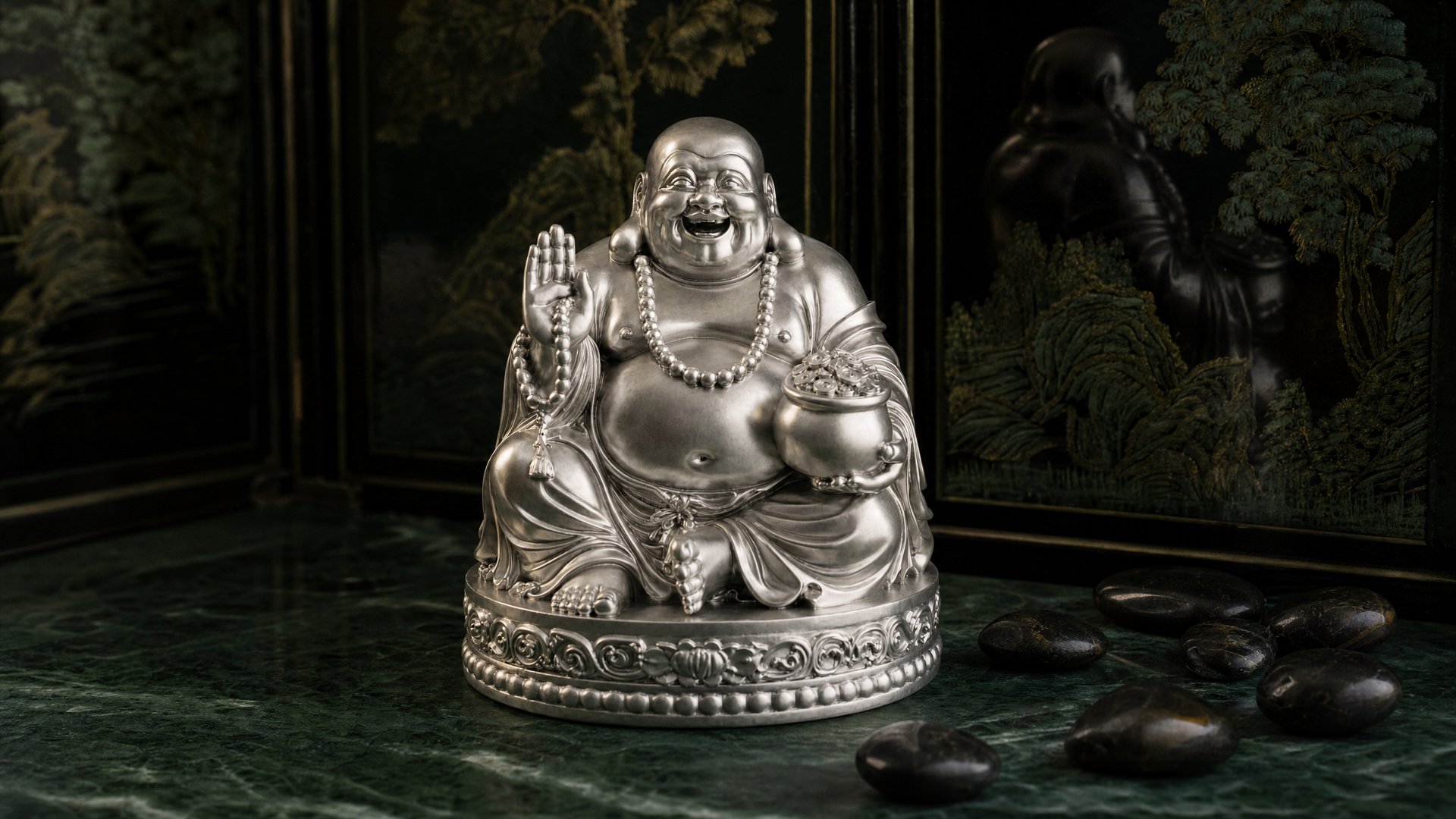
No. A silver statue is not an investment, and we’re the people who sell them. It’s art with a metal floor, and since that phrase decides whether you should spend money with us or with a bullion dealer, the rest of this article unpacks it with real numbers.
We’d rather answer this in the first sentence than let you find the math out later.
The test an investment has to pass, and where a statue fails it
An investment is something you buy in order to sell later for more. That definition drags requirements behind it: the smallest possible premium over silver’s spot price, and a quick, liquid market when you want out. Bullion is built for exactly that. Rounds and bars from a dealer trade close to spot, and any coin shop in the country will quote you a price before you finish setting the tube on the counter.
A statue fails that test on purpose. When you buy one of ours, the price covers eight hand-worked stages (design, 3D printing, casting, refinishing, stamping among them), plus a presentation box, a Certificate of Authenticity, and a person finishing the piece instead of a machine stamping it out by the thousand. The melt value of the silver is less than the sticker price. It has to be. If it weren’t, nobody could afford to make the art half of the object.
So if what you actually want is silver exposure, buy bullion. Sincerely. We would rather lose that sale here, in paragraph four, than take your money and have you discover the spread on your own.
But notice what question you were really asking. Most people who type “are silver statues an investment” aren’t commodity traders. They’re about to spend somewhere between $199 and $4,800 on a serious gift, and they want to know whether the money vanishes the way it does with almost every other gift. That’s a different question. And that one has a much better answer.
The short version
- No, a statue is not an investment — it’s art with a metal floor. For silver exposure, buy bullion instead.
- Every piece is solid .999 fine silver, X-ray tested, with the weight and purity stamped into the metal.
- We’ll buy any piece back at 95–98% of that day’s silver spot for its metal weight — the floor moves with silver, not with what you paid.
- The rest of the price pays for eight hand-worked stages, a Certificate of Authenticity, and a person finishing the piece — not a machine.
- Made to order over 4–8 weeks, from $199 to $4,800.
What “a metal floor” means in dollars
Every statue we pour is solid .999 fine silver, one grade across the catalog, and the stated weight is the silver weight: each piece is X-ray tested for purity and weight before it ships, with both stamped into the metal next to the serial number.
That’s what makes the floor possible. Bring any piece back to us any time, next year or next decade, and we’ll pay 95–98% of that day’s silver spot price for its metal weight. Not store credit. Not “subject to appraisal.” A standing offer on the metal itself.
Now run that against the other things people spend $500 on. A gadget depreciates on a schedule you could graph before you bought it. A designer item resells for a fraction, if the resale site takes it at all. Flowers are compost by Friday. None of those come with any floor. A 10 oz statue always contains 10 troy ounces of fine silver, and there is always a bid for fine silver.
The honest part
One honest caveat, because this is the honest version of the pitch: the floor moves. It’s denominated in silver, not in dollars you paid, so if spot falls, the floor falls with it, and if spot rises, it rises. What the buy-back removes is the risk of the object becoming worthless. It does not promise profit, and we won’t pretend otherwise. Every number in this paragraph sits on our public fact sheet if you want to check our work.
Where the rest of your money actually goes
If the melt value is less than the price, what is the difference buying? Art, made slowly. We’re a family workshop in South Florida and we’ve been pouring since 2004 — around 770 original designs across 15 collections, every piece made to order over 4–8 weeks. Nothing sits in a warehouse. When you order, we pour.
Nobody calls a painting a bad investment because the canvas costs twelve dollars. Art is priced on the finished object, on the design and the hands and the hours. The only unusual thing about our medium is that it’s precious metal, which is why the object keeps a resale floor a canvas never will.
Custom commissions push this one step further: once your piece is cast, the design is retired forever — never recast, never resold. A true one-of-one. That’s real scarcity, and we’re careful about what we claim for it. One-of-one means nobody else can ever own it. It does not mean an auction house will fight over it in thirty years. Buy the commission for the first reason, and let the second stay a maybe.
Three pieces that make the argument by hand
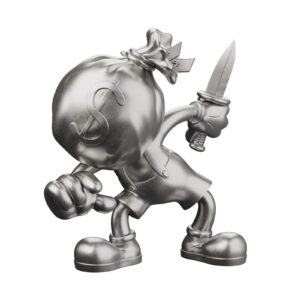
For the person who asked the question out loud
A sack of money cast in actual precious metal. The joke lands because it isn’t entirely a joke: hand them the bag and they’re holding the floor.
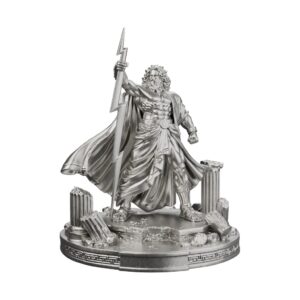
The shelf anchor
Zeus, King of the Gods Silver Statue
A lot of troy ounces arranged into a king of Olympus, and it reads that way from across the room. For the recipient who’d rather own one commanding piece than five forgettable ones.
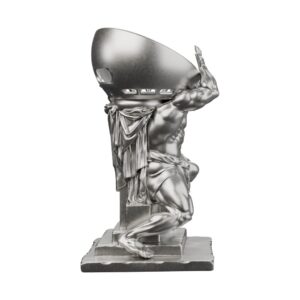
For the person who carried the family or the business
A titan carrying the world, in a metal that actually weighs something. Pick the piece up once and the metaphor does its own work.
Buy it as a gift. Let the floor ride along.
Here’s the clean way to hold all of this. If your goal is a return, go buy bullion near spot and we’ll wave as you go; that’s the right tool. If your goal is a gift that stops someone mid-unwrap, buy the art, and treat the buy-back as what it is: a floor under the sentiment, the reason this gift can never quietly become worthless in a drawer.
The wait is the only other cost. Made to order means 4–8 weeks, so this is a decision for people who plan, not people shopping the night before.
Where to start
Start where the gift-buyers start: the gifting hub sorts the catalog by recipient and occasion, floors included at no extra charge.