

What Does .999 Fine Silver Mean? (And Why It’s the Only Grade We Pour)
.999 fine silver means 999 parts pure silver per 1,000. What the stamp proves, how we test it, and why our whole catalog now pours at one grade.
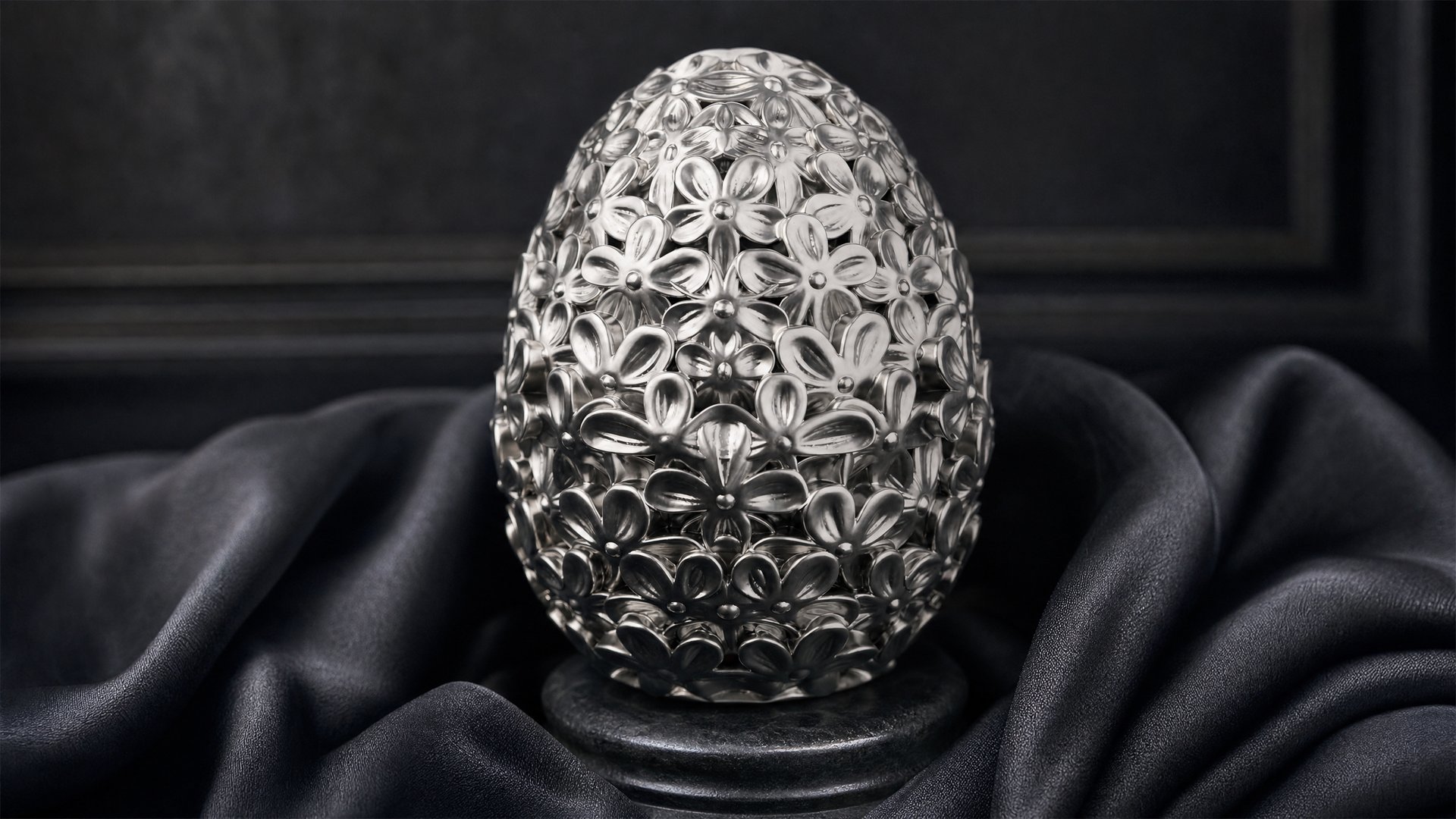
.999 fine silver is 99.9% pure silver: 999 parts silver in every 1,000 parts of metal. When that number is stamped into the base of a statue, it means there is almost nothing else in the piece. No filler alloy. No plating over a mystery core. Silver, nearly all the way through.
That’s the short answer. The longer one covers where the number comes from, why most of the “silver” you’ve handled in your life never came close, and why, as of August 2026, this is the only grade our workshop pours.
Where the number actually comes from
Precious metals are graded in parts per thousand (the trade calls it millesimal fineness). A piece marked 999 contains 999 parts silver out of 1,000. The remaining one part is trace elements no refiner can economically chase out. Government mints strike their bullion coins at this same grade, and when a dealer says “fine silver,” this is the number he means.
So the stamp isn’t a brand name or a marketing tier. It’s a claim about the metal itself, and anyone with an X-ray fluorescence gun can check it in about thirty seconds.
We check before you ever can. Every statue that leaves our South Florida workshop is X-ray tested for purity and for weight, and both figures travel with the piece: stamped into the silver, printed on the Certificate of Authenticity, tied to a serial number that belongs to that one casting and no other. The certificate rides in the presentation box with the statue, and the whole thing carries a limited lifetime warranty against defects. Keep the paperwork. Twenty years from now, when someone asks what the piece is worth, those two documents answer for you.
The short version
- .999 fine silver means 999 parts silver in every 1,000 — almost nothing else in the piece.
- It’s the only grade we pour, since August 2026 — sterling was retired, one grade across all ~770 designs.
- Every statue is X-ray tested for purity and weight, stamped, and certified with a serial number.
- The stated weight is the silver weight — no multiplying, no guessing.
- We buy any piece back at 95–98% of spot — a floor under the gift, not an investment pitch.
Why most silver never gets near 999
Most gift buyers never hear this part. Nearly every silver object you’ve owned, rings, chains, forks, the baby cup from your grandmother, was made less pure on purpose. Jewelers cut silver with copper because pure silver is soft, and a ring spends forty years getting knocked against door frames and steering wheels. The copper buys hardness. It costs purity, and it costs one more thing besides: copper is the reason most silver tarnishes as fast as it does.
A statue lives a different life. It sits on a shelf. Nobody wears it in the shower, and nobody drops it in the sink with the dishes, which is why a cast statue is one of the few silver objects on earth that can afford to be as pure as poured metal gets.
No armor needed. Just silver.
Why we retired every other grade
Until this August our catalog carried more than one grade, the way most of the industry still does. In August 2026 we simplified: sterling was retired, and the entire line of roughly 770 designs across 15 collections moved to .999 fine. One grade, every piece.
The old menu made buyers do chemistry homework before they could do the fun part. Now the label reads the way you’d want it to. The stated weight is the silver weight: a 10 oz statue holds ten troy ounces of fine silver, and you don’t have to multiply by anything. Care is one routine instead of two. And the buy-back math fits on a napkin: we’ll buy the metal weight back at 95–98% of the day’s spot price, any time, no questions. That’s a floor under the gift, not an investment pitch. These are art pieces that happen to be worth their weight.
Pricing runs on one ladder too, from $199 at 1 oz to $4,800 at 32 oz, with ten standard sizes between.
One grade also settles the awkward question you’d otherwise have to ask anywhere else. If you’re comparing one of our pieces against a “silver” statue from another shop, ask them for the fineness in writing. Some will say plated. Some will say they don’t know. Either answer tells you what you needed to know.
What one grade looks like with light on it
Fine silver has a soft white color that copper-bearing alloys don’t quite match, and different shapes show it differently.
When the purity is half the point
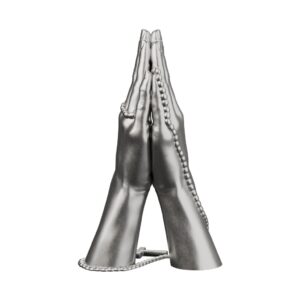
The piece people choose for a confirmation, an ordination, a memorial. Handing someone a devotional object and being able to say “there’s no substitute metal in this” does something a card can’t.
The honest test of a pour
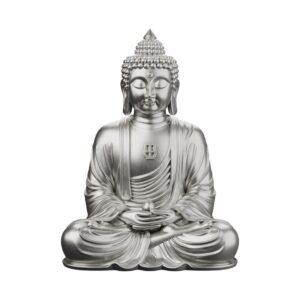
Broad, smooth, and polished, with nowhere for the metal to hide. Simple forms are the honest test of a pour, and this one passes in any light.
Pure doesn’t mean plain
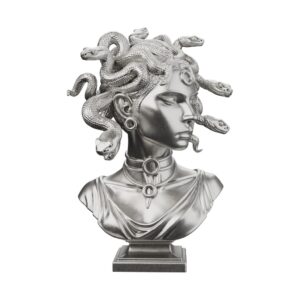
A head full of individually rendered snakes, every coil cast in the same 999 metal as the base it stands on.
The rest of the catalog, all of it now at this one grade, is at Shop all.
What fine silver asks of you in return
Two honest trade-offs
Pure silver is softer than the alloyed kind, so treat a statue like art rather than cutlery: a soft dry cloth for dust, a silver cloth if it ever darkens, and never abrasive polish or dips. Ignored long enough it will slowly mellow in tone — more slowly than alloyed silver, but metal is metal. Keep it out of direct sun and heavy humidity and it stays bright for years. And there’s the wait: every piece is poured to order in a 4–8 week process with eight hand-worked stages, and we email you at each one. If the gift has a date attached, count backward from it before you order.
Where to start
That's the whole meaning of the stamp: 999 parts per thousand, tested under X-ray, certified by serial, backed by a standing buy-back.